Bingxin Zhuang
庄秉鑫
Founder & President, Eco-Friendly Handcraft Club · Lead Instructor, Children's Eco-Creation Workshop
Bingxin began by founding a club: making finished work out of eggshells, pinecones and oyster shells that were headed for the bin, teaching those techniques to younger children, and finally putting a year of the club's work on a table in front of the community. This page follows that year in order — the work, the roles taken on, and what each step asked for.
Project Journey
2024.05.04
Eco-Friendly Handcraft Club · Founding and first sessions
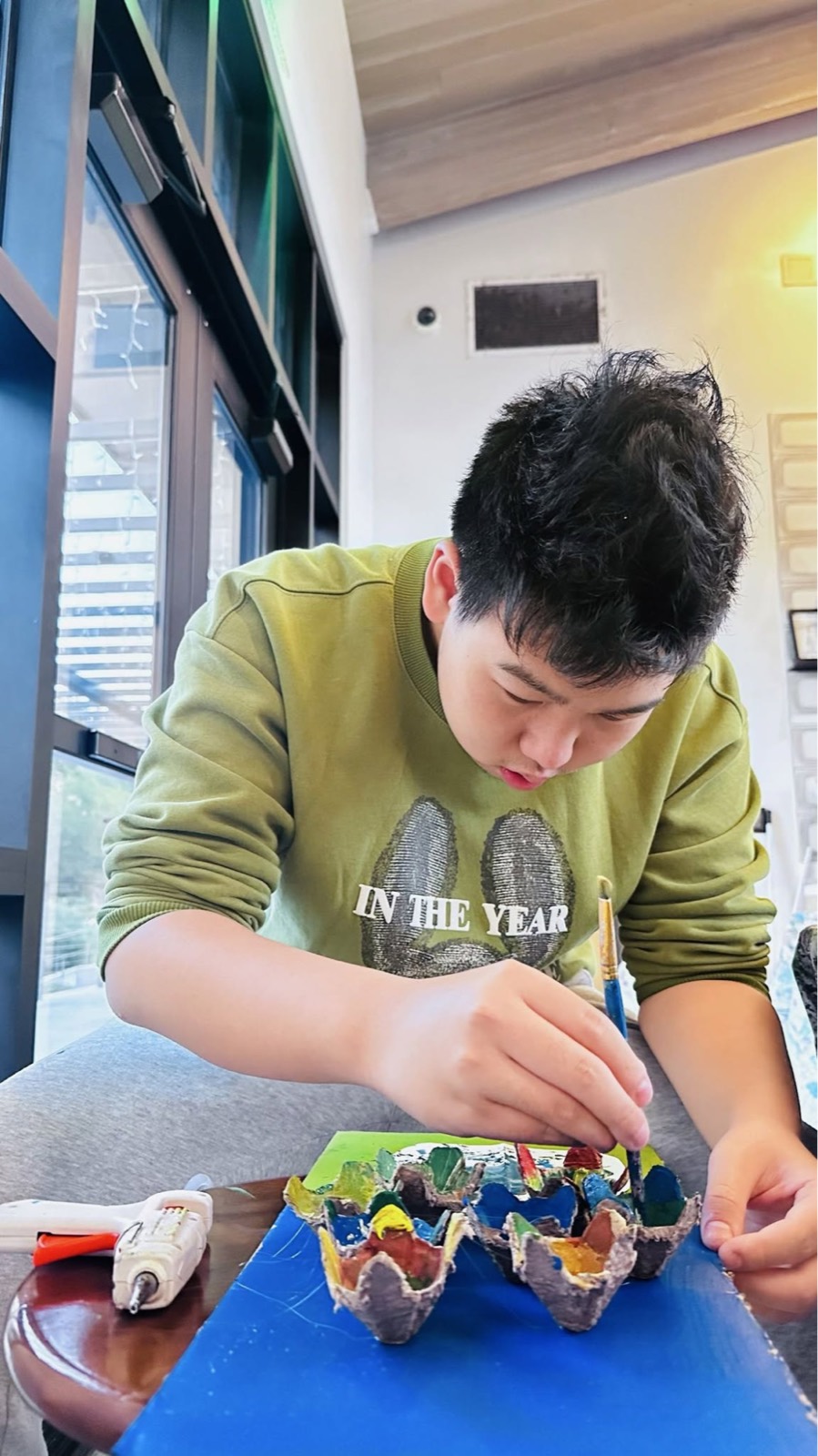
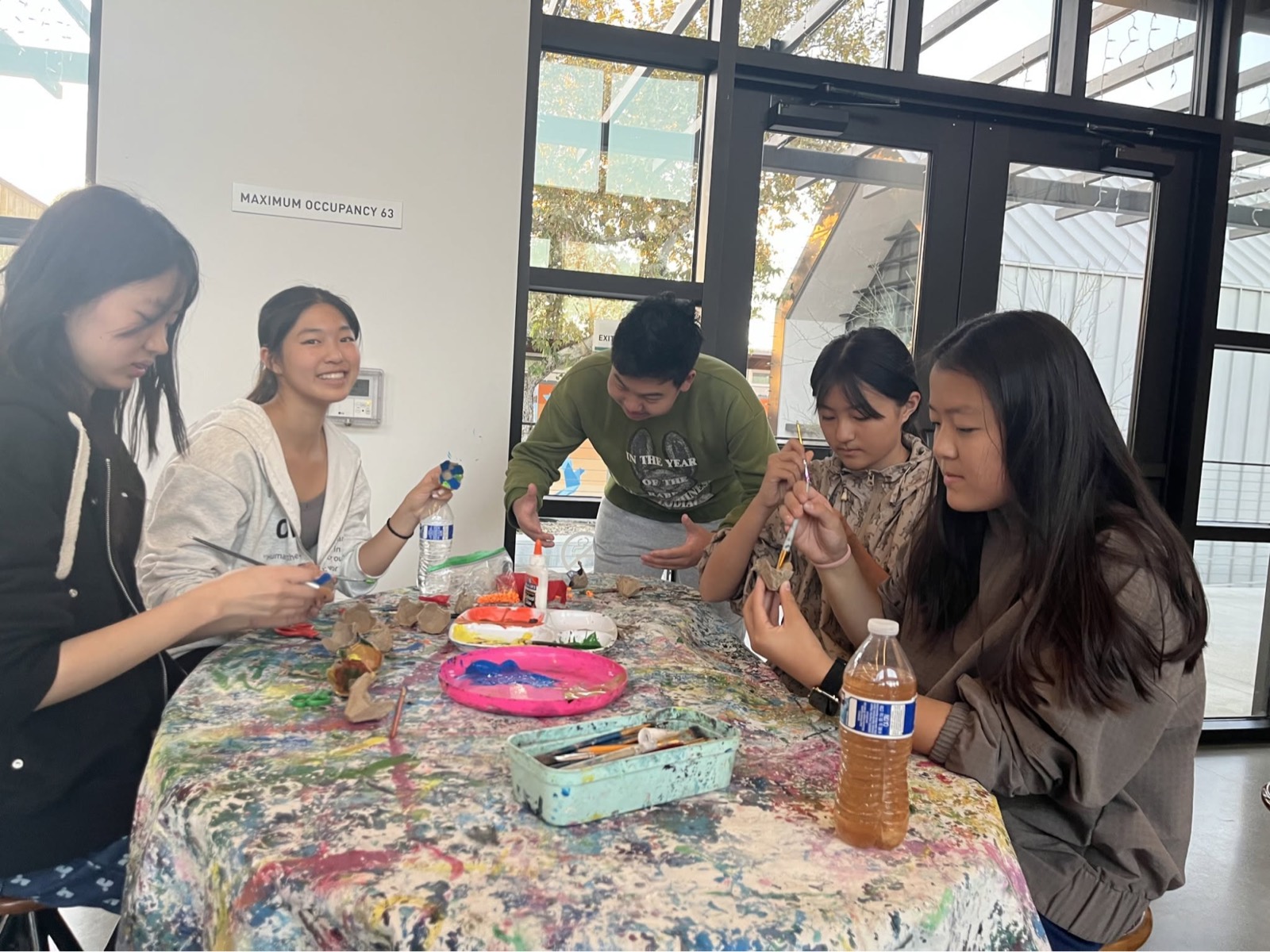
Founded the Eco-Friendly Handcraft Club on four ideas — sustainability, creativity, public service and long-term environmental responsibility — with one concrete working method: design and make things from discarded, recyclable and natural materials, so that turning waste into something worth keeping becomes a weekly practice rather than a slogan. The first sessions started with the most disposable thing at hand, painting egg cartons and eggshells, and the way the club would work was settled around that table.
2025.06.12
Oyster-Shell Art Series
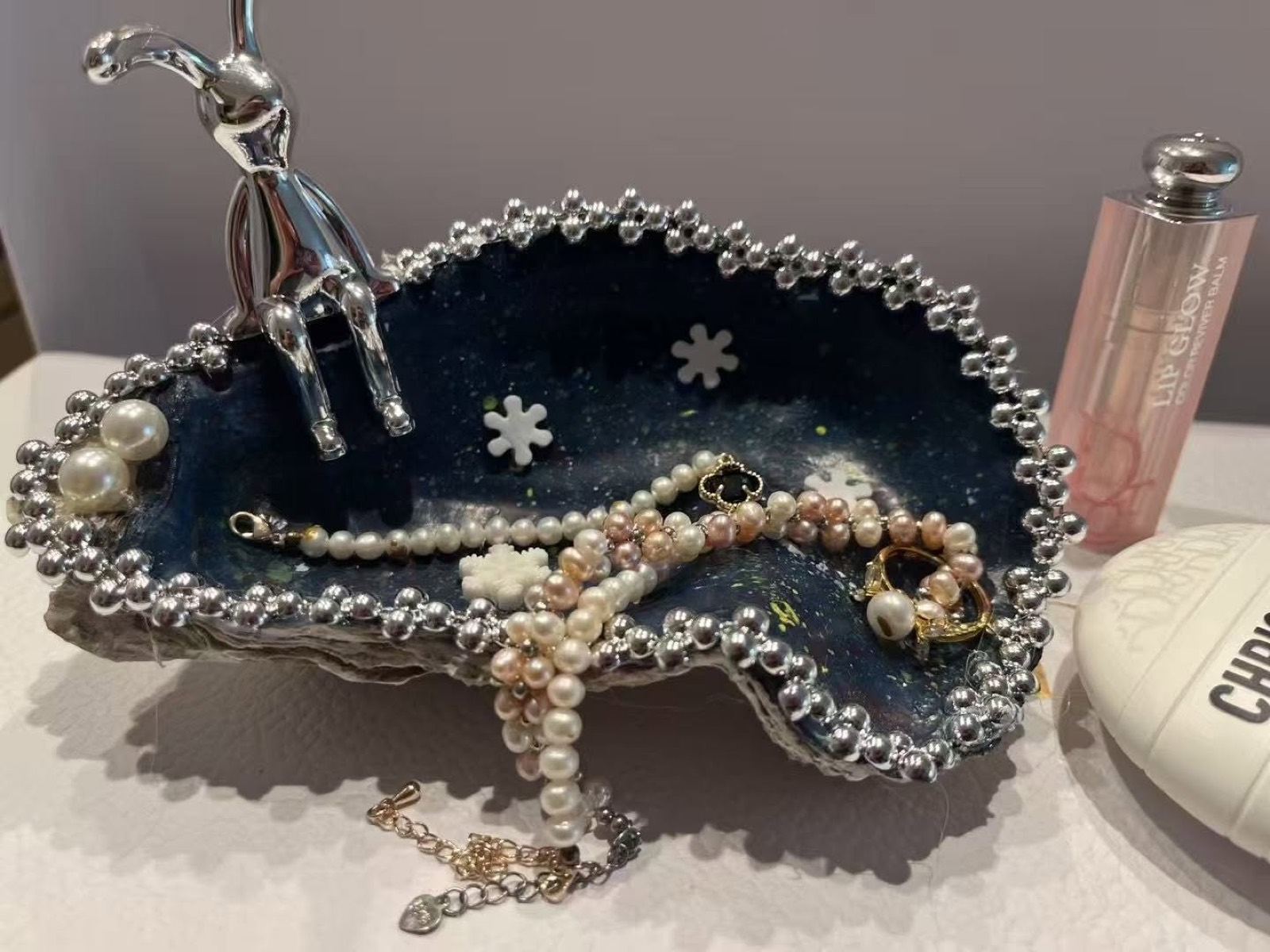
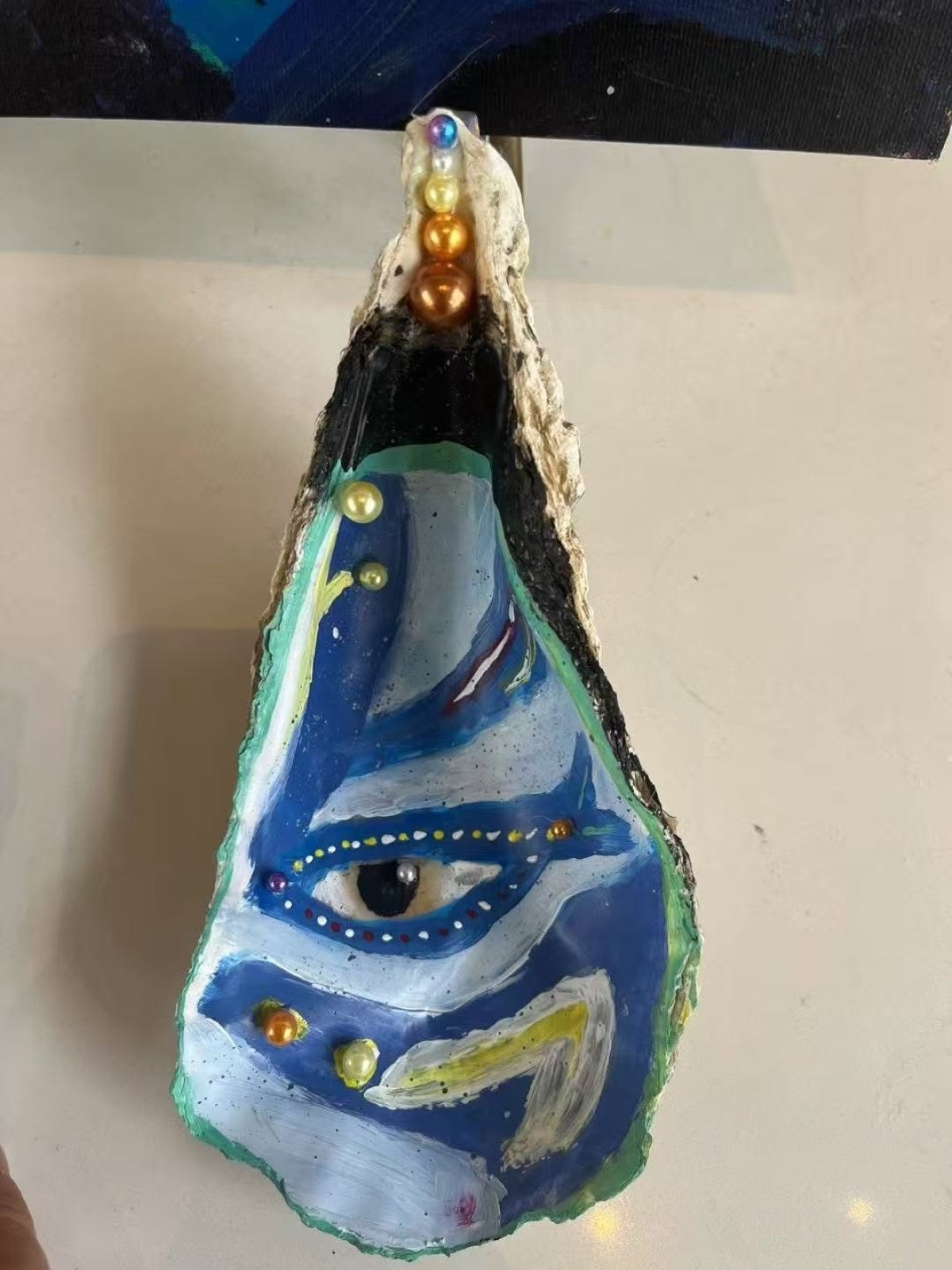
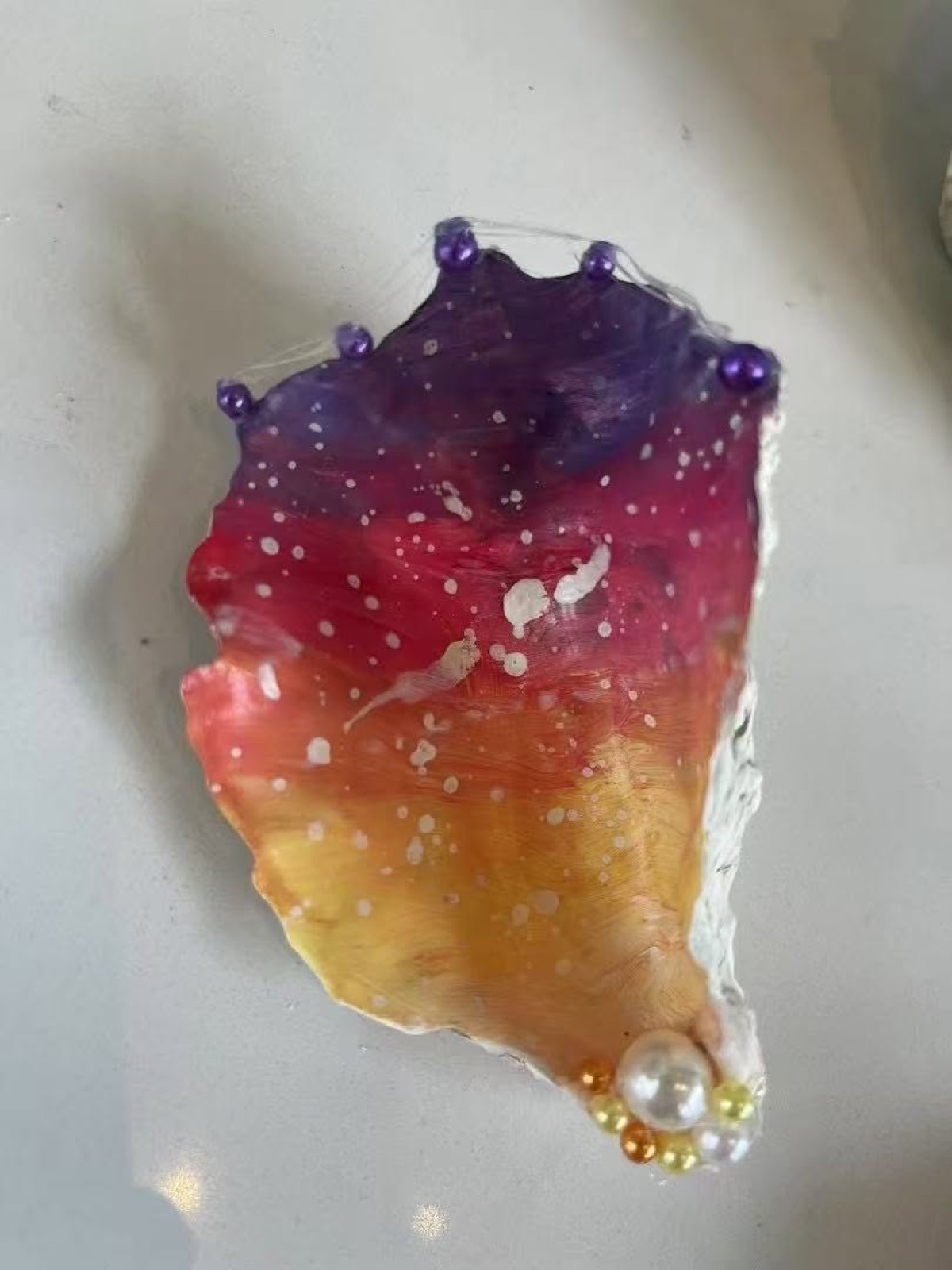
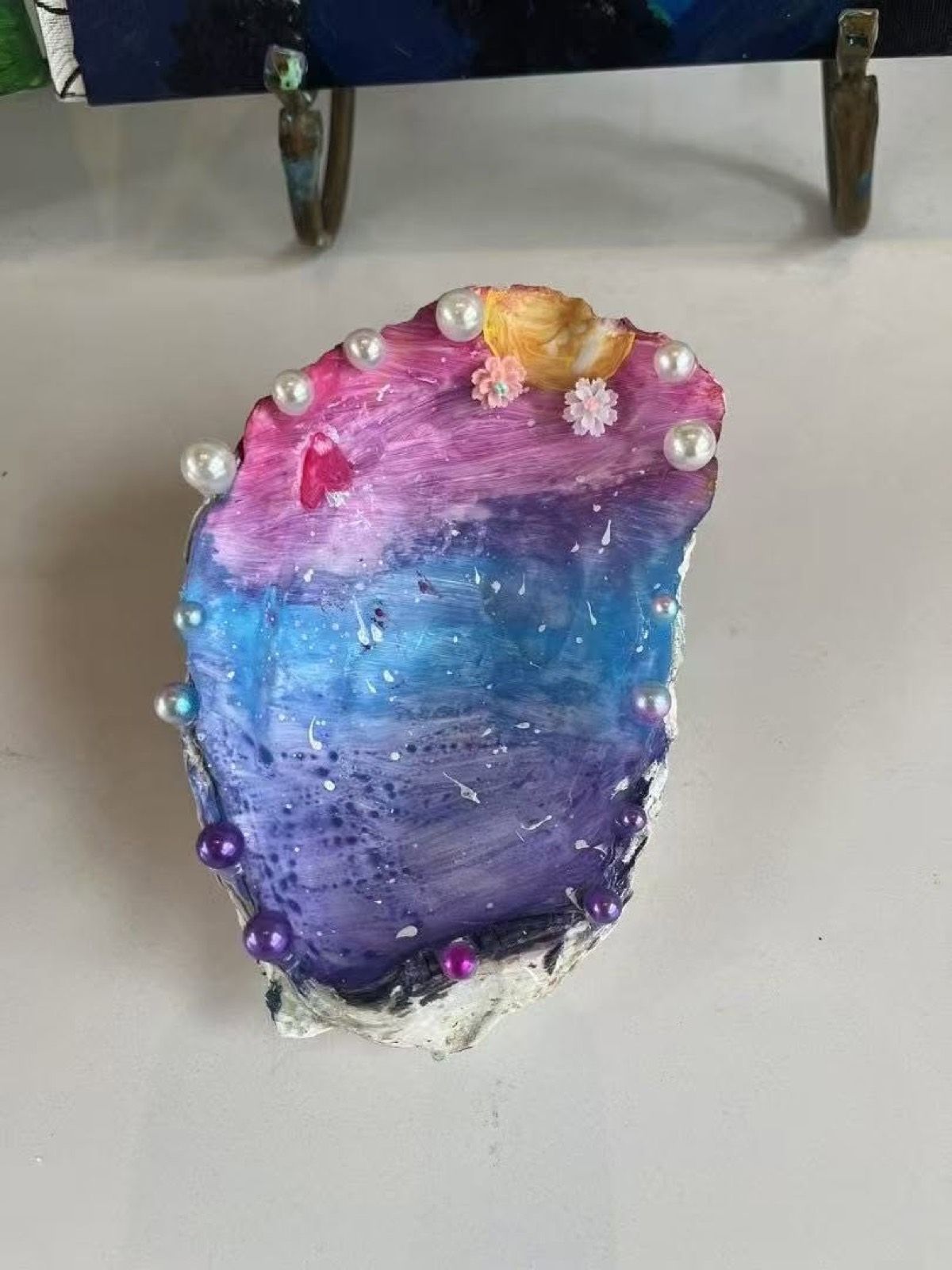
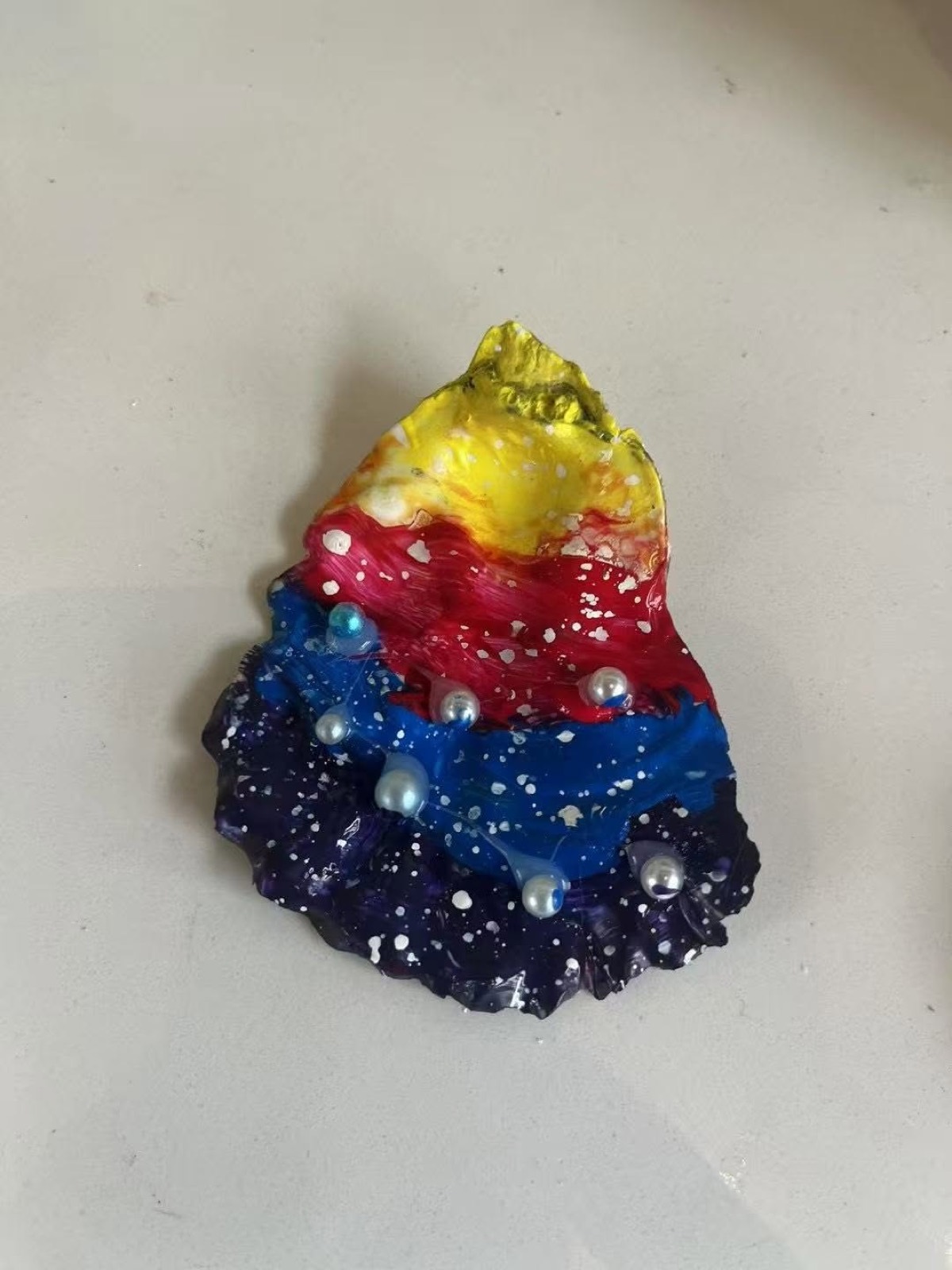
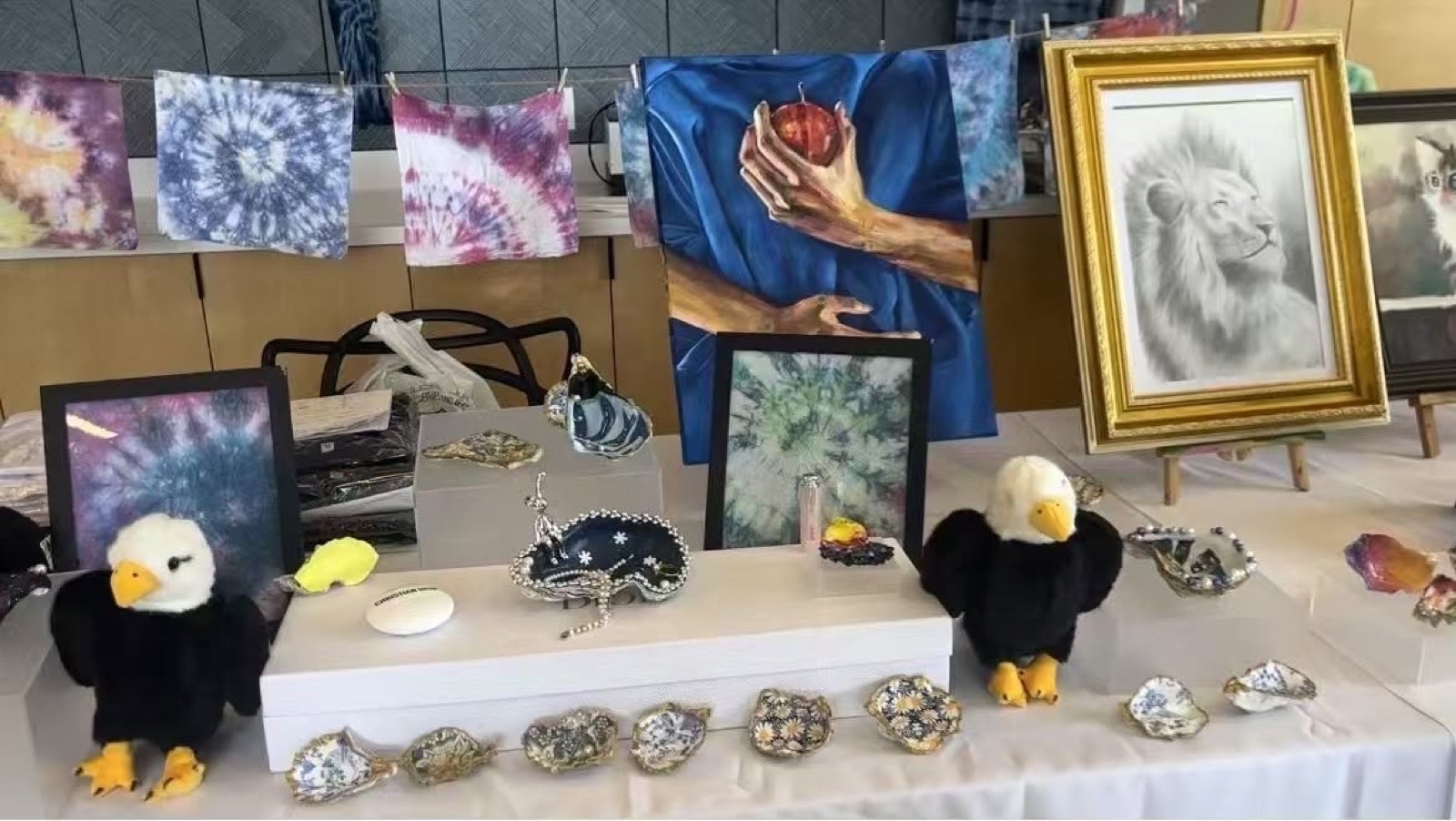
Cleaned and sanded oyster shells left over from meals, then finished them in paint, pearls and beadwork as a series of individual pieces — a night sky, a sunset, a wave — along with a bead-edged jewellery tray that puts the 'waste' straight back into daily use. A shell's shape is irregular and cannot be corrected, only followed, so every composition had to be built around the surface it was given.
2025.06.15
Tie-Dye Workshop
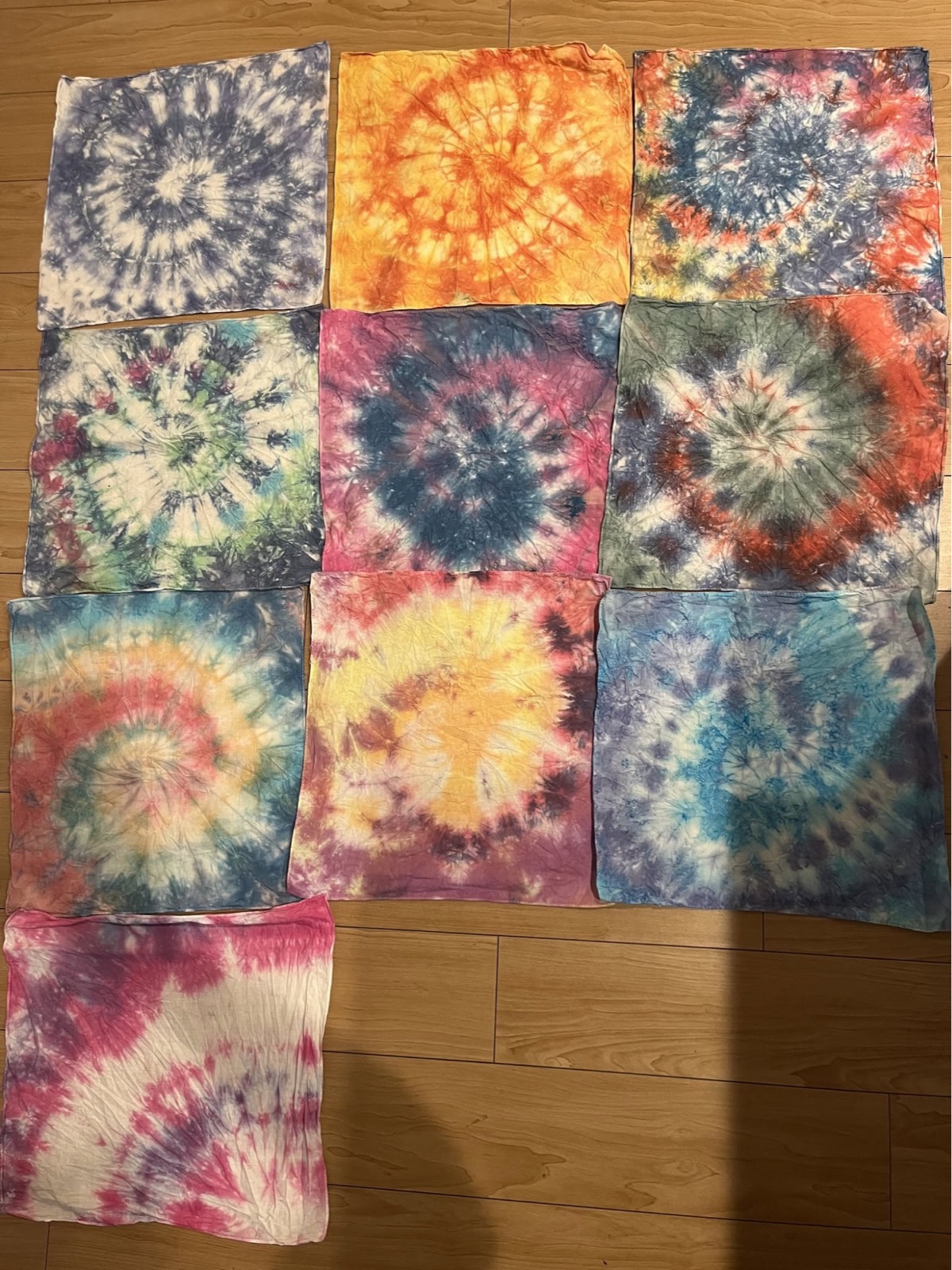
Ran the club's tie-dye workshop, which produced ten finished pieces in a single session — spirals, sunbursts and concentric rings, each from a different binding, folding and dyeing sequence. It was the first time the club organized making as a repeatable process, and it was that repeatability which later made the technique teachable to younger children.
2025.06.25
Children's Eco-Creation Workshop
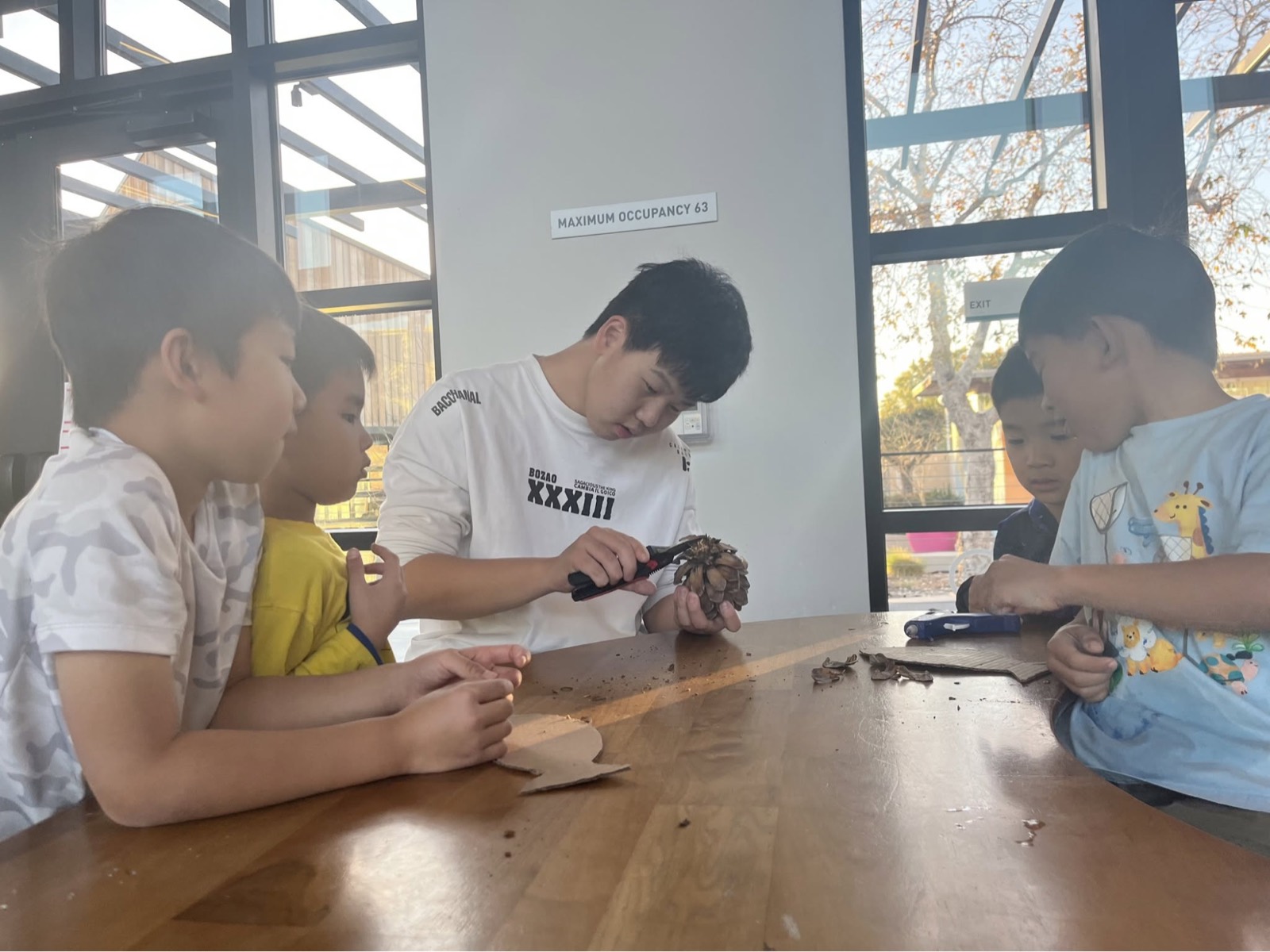
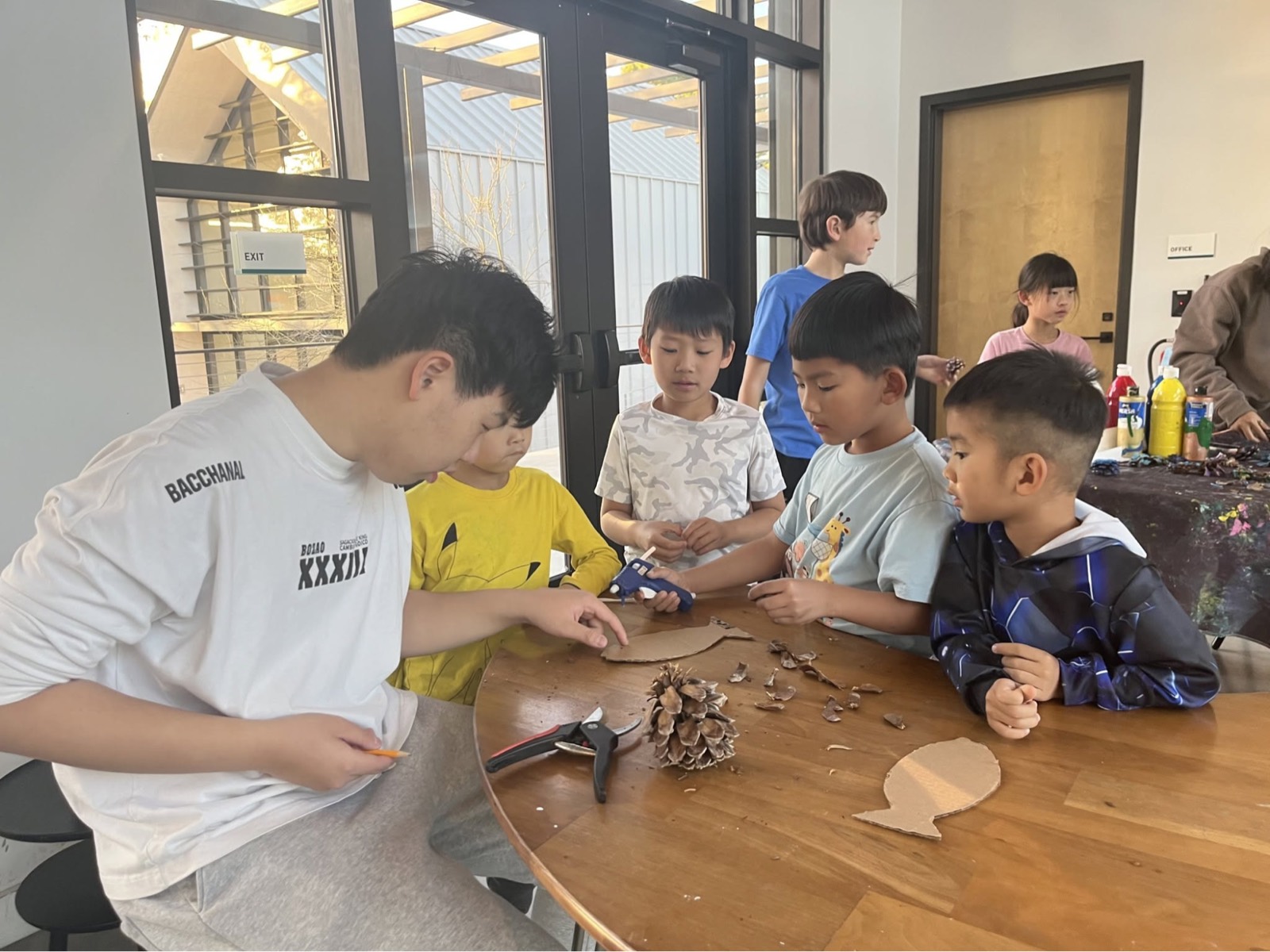
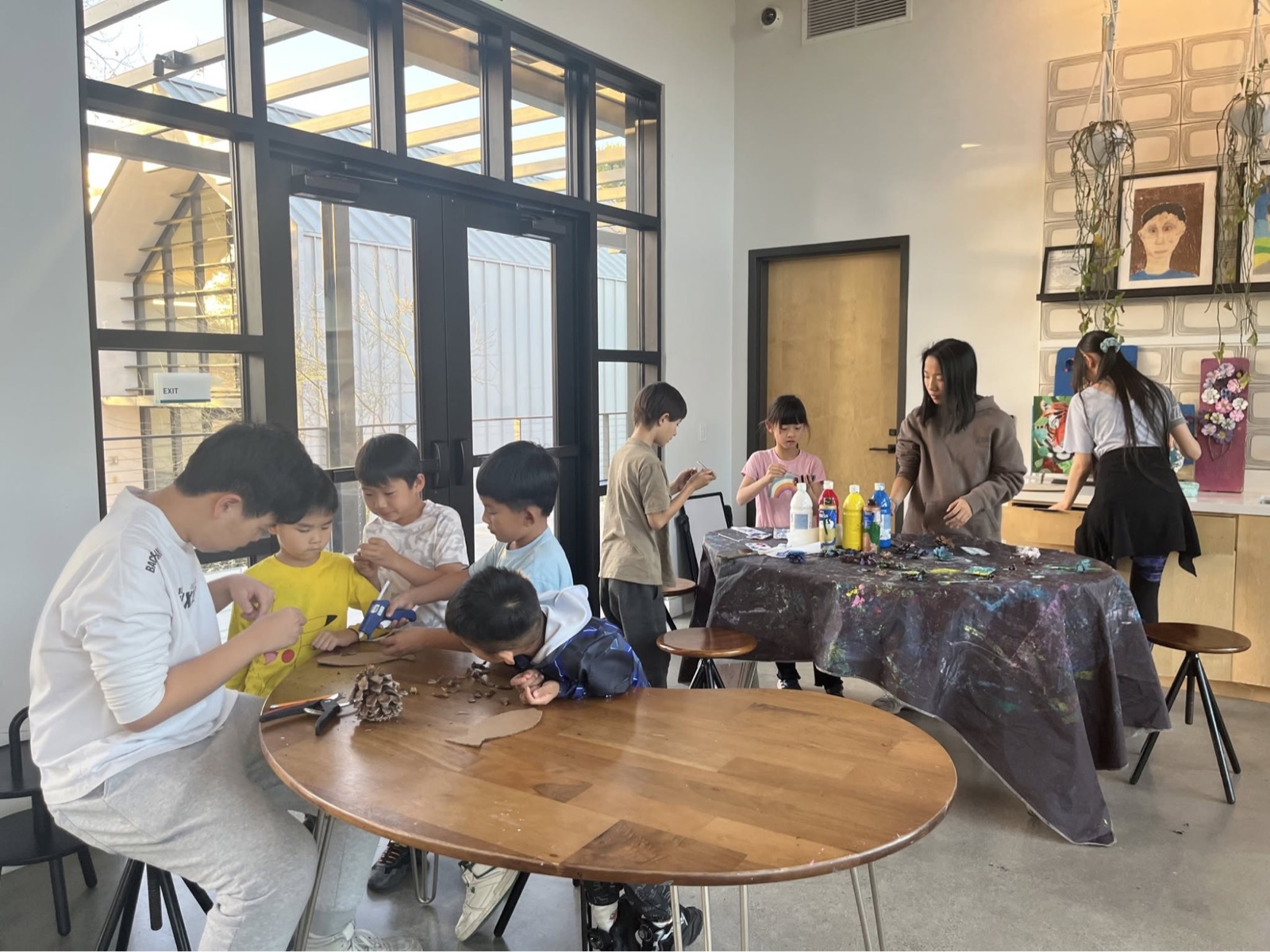
Initiated and taught an eco-creation workshop for primary-school-age children, breaking the club's accumulated techniques into steps small hands could follow: mostly natural materials such as pinecones and bark, demonstration table by table, corrections on how to hold a tool and apply glue, and then a finished piece of each child's own to exhibit. The work was recognized that September with a Certificate of Social Practice (no. 20250422A).
2025.11.28
Community Exhibition
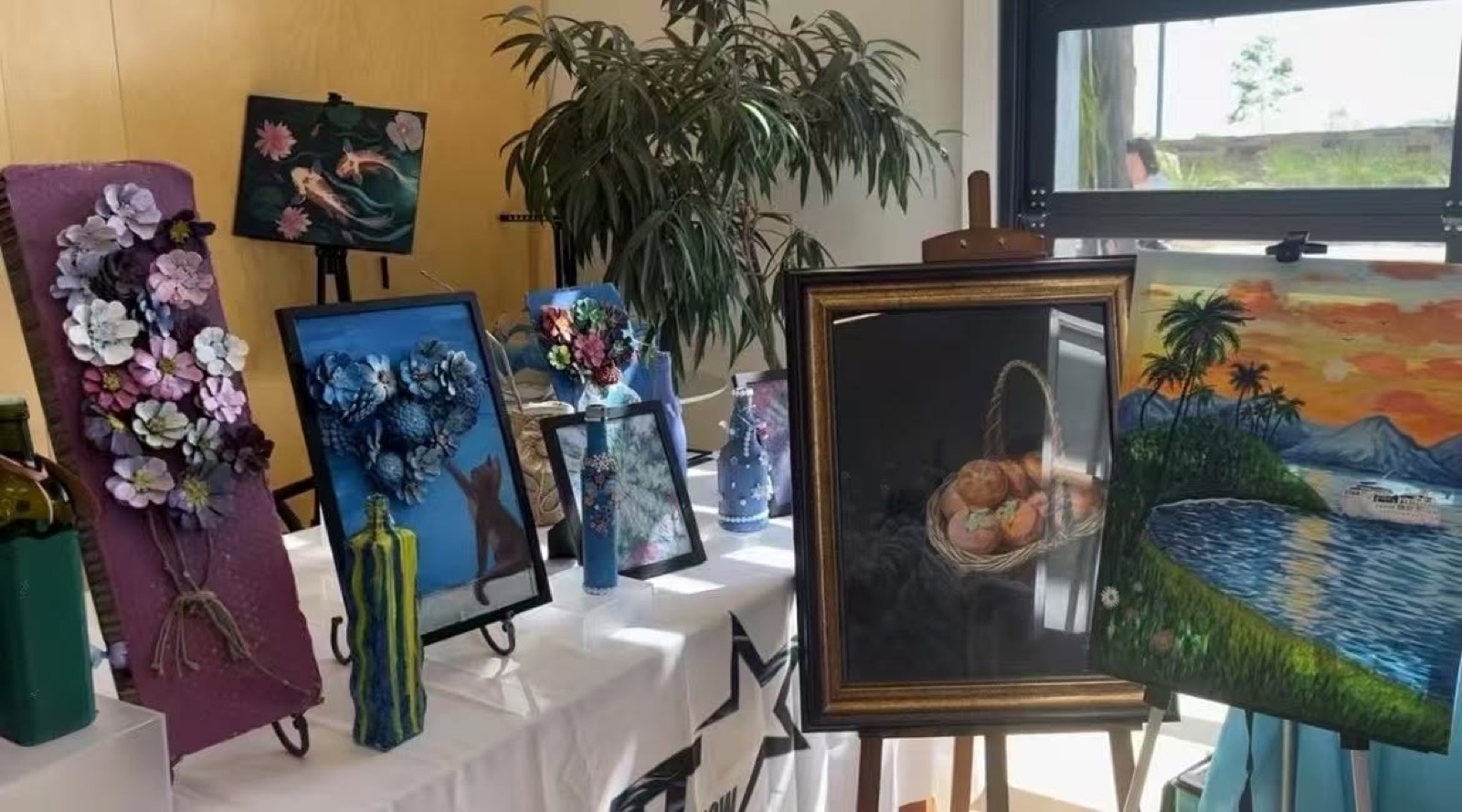
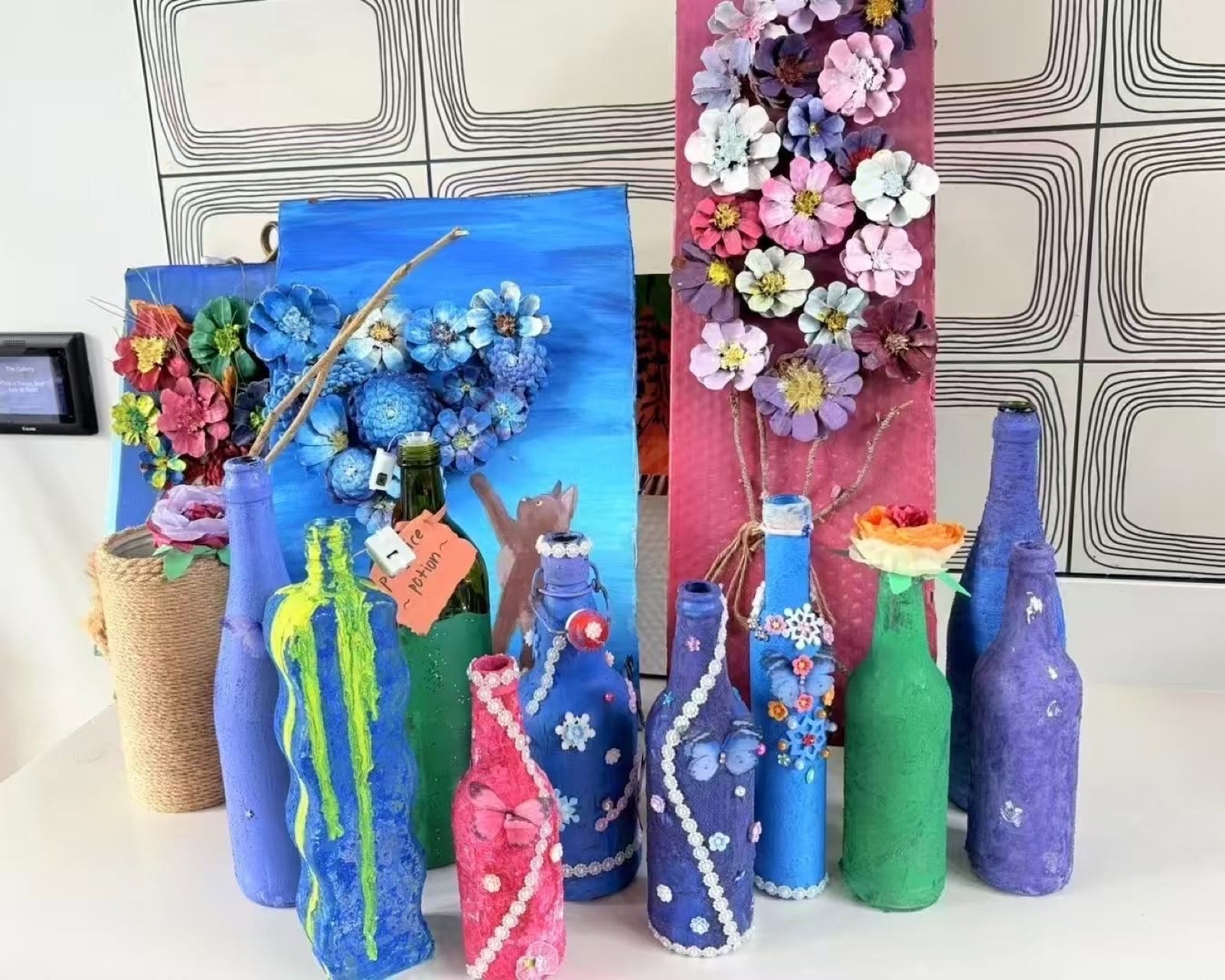
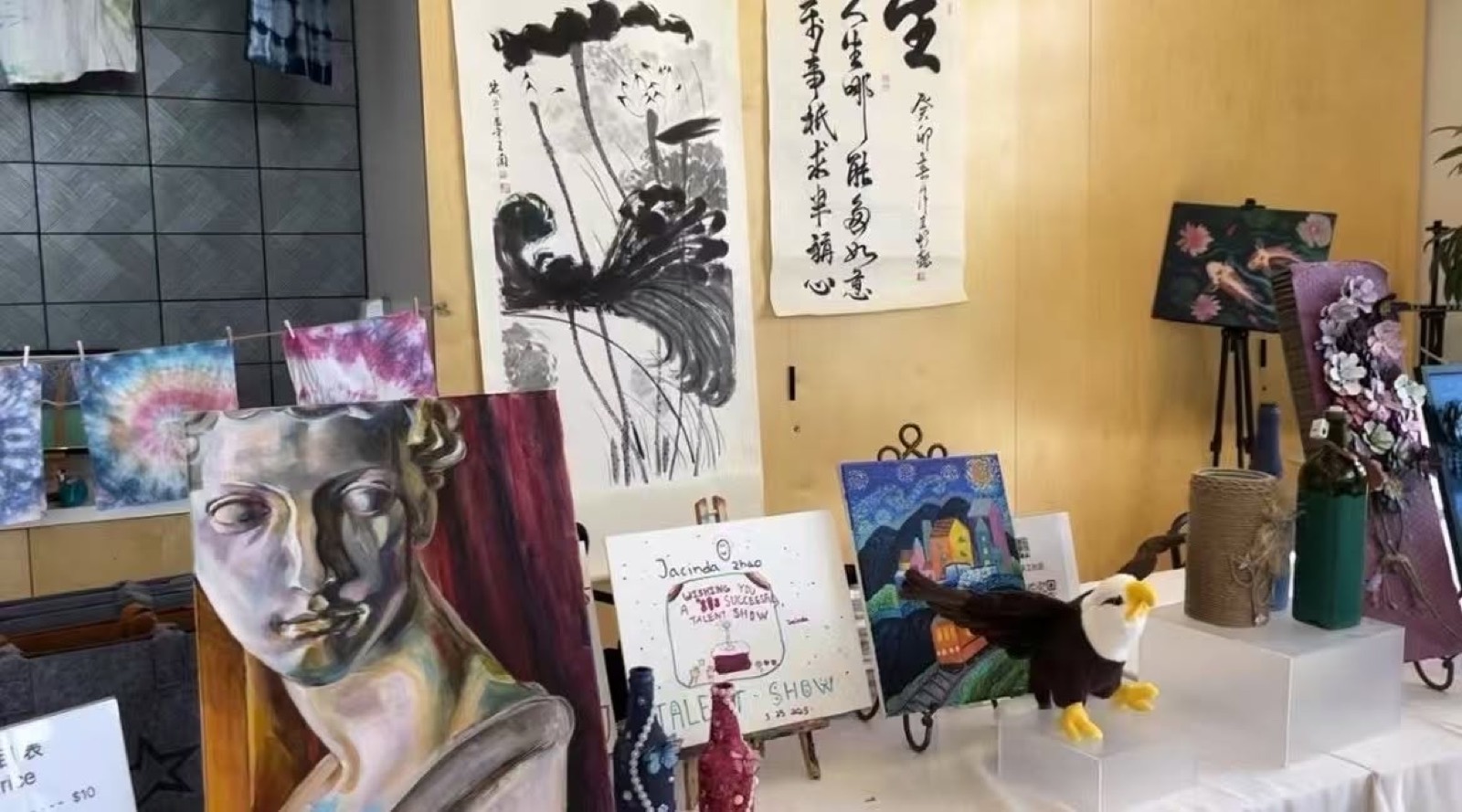
As club president, staged the year's work as a community exhibition — painted oyster shells and upcycled bottles, tie-dyed cloth, painted stones and framed paintings arranged into a single walk-through, with the makers on hand to explain where each material came from and how it was worked. It moved the club's work out of after-school hours and into a public setting, where neighbours could see for themselves what upcycling actually produces.
Center's Evaluation
As founder and president of the Eco-Friendly Handcraft Club, Bingxin Zhuang has led the team with a consistently high sense of responsibility, advocating for environmental care, planning and organizing a wide range of creative handcraft practice, and producing striking pieces from materials such as eggshells, pinecones and oyster shells — work the club went on to exhibit at community events. In team management, project organization, community service and public-interest practice, Bingxin has shown outstanding leadership, inventiveness and social responsibility, contributing meaningfully to sustainability education.
 Asia-Pacific Youth Growth Center USA
Verifiable Certificates
The certificate numbers below can be verified instantly on our certificate page.

About this page
This page is compiled, published, and maintained by Asia-Pacific Youth Growth Center USA based on the student's real participation in our programs. Last updated August 2026. The link may be shared directly with schools, admissions officers, and partner institutions.